-
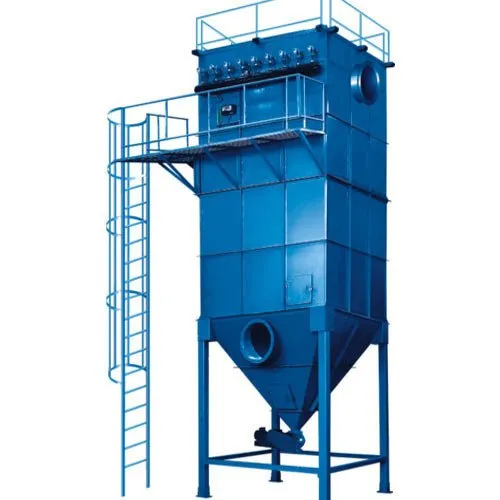
Fabric Filter Bags: The core of the bag filter consists of a series of fabric bags, typically made from materials such as polyester, polypropylene, or fiberglass, depending on the temperature and type of particles being filtered. These bags act as a physical barrier that captures particulate matter as flue gases pass through them.
-
Dust Collection: As flue gases pass through the bag filter, the solid particles (such as dust, ash, and soot) are trapped in the fabric bags. Cleaned gases then pass through the filter and are released into the atmosphere or directed to other treatment processes.
-
Pressure Drop: A bag filter operates under the principle of pressure difference. The gases flow from the outside to the inside of the fabric bags. The particulate matter gets trapped on the outside of the bags, and the cleaned gases flow through the bag and exit the filter.
-
Cyclic Cleaning: Over time, the bags accumulate particulate matter, which can reduce the filters efficiency. To prevent clogging, bag filters are periodically cleaned using various cleaning methods:
-
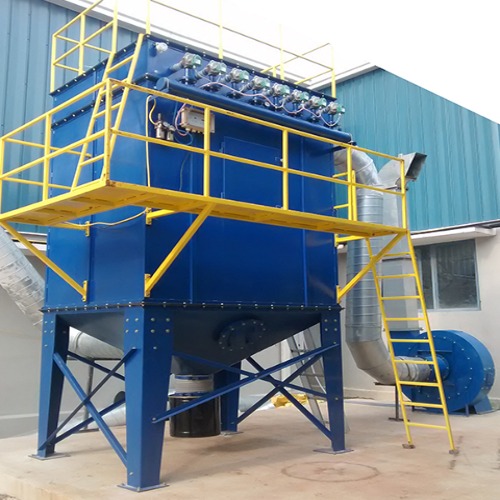
Pulse Jet Cleaning: This method involves periodically injecting compressed air into the bags, causing them to expand and release the trapped dust.
-
Shaker Mechanism: The bags are shaken to remove accumulated dust.
-
Reverse Air Cleaning: Air is blown in the opposite direction through the bags to dislodge the particles.
-
Dust Collection System: The particulate matter that accumulates on the bags is collected in a hopper or bin at the bottom of the bag filter. This dust can either be disposed of or, in some cases, reused, depending on the type of fuel and the particulate material.
-
Efficient Filtration: Bag filters are capable of achieving high particulate removal efficiencies, often greater than 99%, depending on the size of the particles and the type of fabric used.
-
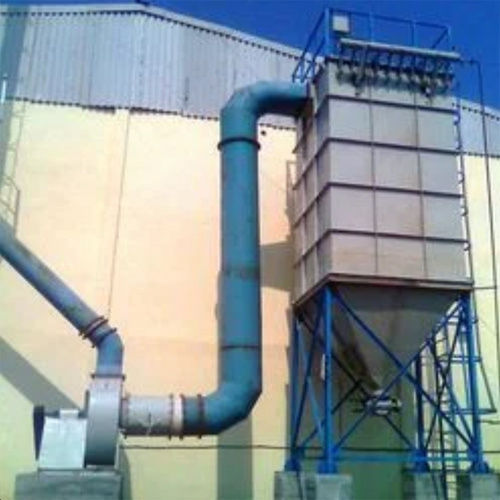
Exhaust Gas Entry: Flue gases from the boilers combustion process, which contain particulate matter, enter the bag filter system.
-
Filtration Process: The gases pass through the fabric bags. As the gas flows through the bags, particulate matter (such as dust, soot, and ash) gets trapped on the outside surface of the fabric.
-
Clean Gas Exit: The cleaned gas exits the bag filter system, either through the top or side, and is then directed to the stack for release into the atmosphere or directed to further treatment processes (e.g., a stack scrubber for additional air pollution control).
-
Dust Removal: Once the filter bags become clogged with accumulated particulate matter, they are cleaned. Cleaning is typically done by pulse jet cleaning, which releases bursts of compressed air into the bags to dislodge the accumulated dust, allowing it to fall into a collection hopper.
-
Dust Collection: The dislodged particulate matter is collected in a hopper or bin located at the bottom of the bag filter system. This collected dust can be disposed of or used for other purposes, depending on its composition.


 Send Inquiry



 Send Inquiry



